Stop Oversharing on First Dates — The Case for Keeping a Little Mystery
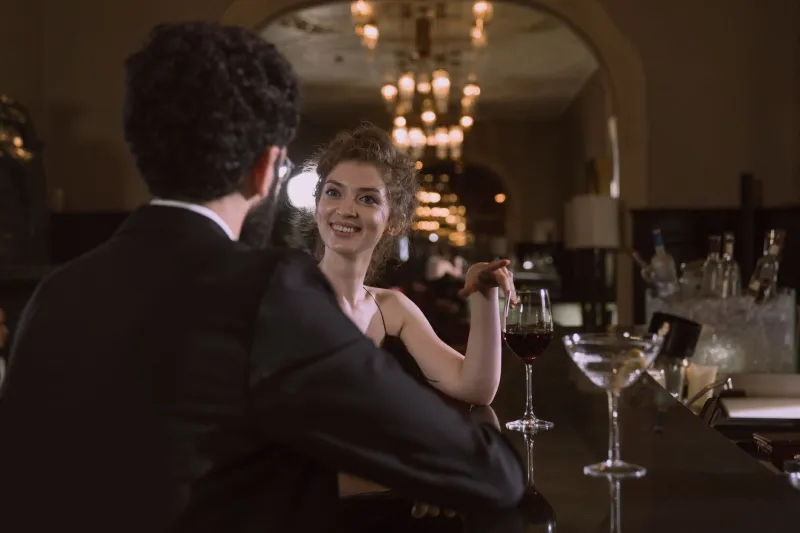
Somewhere between the self-help boom and the rise of therapy-speak on TikTok, first dates got really, really heavy. We've been told — loudly and repeatedly — that vulnerability is the foundation of real connection, that showing up "authentically" means putting everything on the table, and that emotional openness is the ultimate green flag. And honestly? That advice has done a number on people.
Because here's what nobody's talking about: a lot of daters are walking away from perfectly good first dates feeling drained, overwhelmed, or just plain weird about how much they revealed. Or worse — they're ghosting someone who seemed great on paper because the conversation felt more like a deposition than a date.
The modern obsession with radical honesty has a shadow side. Let's get into it.
When "Authentic" Becomes Exhausting
There's a specific kind of first date that's become almost a cliché in big US cities right now. Two people meet at a wine bar, and within 45 minutes they've covered childhood trauma, their last therapist, why their most recent relationship "was actually really toxic," and their attachment style. They both leave thinking they had a "deep" connection. Then neither of them texts first, and the whole thing quietly fizzles.
Sound familiar?
Dating coach Mara Simone, who works with clients in New York and Los Angeles, says she's seeing this pattern constantly. "There's been this cultural shift where people equate emotional disclosure with intimacy," she explains. "But real intimacy is built over time. When you fast-track it on a first date, you're essentially skipping the courtship phase entirely — and that phase actually matters for attraction."
The science backs this up. Psychologists refer to something called the "reciprocity norm" in self-disclosure — the idea that people feel most comfortable when information is shared gradually and mutually. When one person jumps several levels ahead, it can feel destabilizing rather than connecting, even if the intention behind it is genuine.
The Authenticity Trap
Here's the paradox nobody warned us about: the harder you try to perform authenticity, the less authentic you actually seem.
When oversharing becomes a dating strategy — even a well-intentioned one — it stops being vulnerability and starts being a kind of social script. People can feel the difference. If you're leading with your therapy breakthroughs because you've been told that's what emotionally available people do, that's not the same as something real and spontaneous emerging in conversation.
Dr. Priya Nair, a relationship psychologist based in Chicago, puts it plainly: "Authenticity isn't about volume of disclosure. It's about congruence — whether what you're saying actually matches what you're feeling in the moment. Some people overshare because they're nervous, or because they've been burned before and they want to pre-screen their date. That's understandable, but it's not the same as genuine openness."
There's also something worth naming about who bears the brunt of this pressure. Women, in particular, often receive conflicting messages — be open and emotionally available, but don't seem "too much." Men are told to show vulnerability, but risk being perceived as unstable if they go too deep too fast. The "be your authentic self" mandate lands differently depending on your gender, and that's worth acknowledging.
Mystery Isn't Manipulation — It's Just Good Pacing
Let's rehabilitate the concept of mystery for a second, because it's gotten an unfair reputation.
In dating culture right now, holding things back is sometimes coded as "playing games" or being emotionally unavailable. But there's a meaningful difference between strategic withholding designed to manipulate someone and simply letting a relationship unfold at a natural pace. One is a power move. The other is just... how human connection actually works.
Attractive mystery isn't about being cold or evasive. It's about having a full interior life that you reveal selectively, over time, as trust develops. It's about leaving a first date with your date genuinely curious about you — not because you were fake, but because you were interesting and layered, and they want to know more.
"The people who are most magnetic on dates aren't the ones who tell you everything," says Simone. "They're the ones who make you feel seen while still feeling like there's more to discover. That tension is what creates the pull to see someone again."
Finding the Sweet Spot
So what does healthy, genuine connection on a first date actually look like? A few principles that dating coaches and psychologists keep coming back to:
Match the energy of the room. If your date is keeping things light and playful, follow their lead. You can be warm and present without steering into heavy territory before the vibe supports it.
Share experiences, not diagnoses. There's a difference between saying "I had a complicated relationship with my dad" and spending 20 minutes unpacking your family system. The former is a real, relatable moment. The latter is a therapy session your date didn't sign up for.
Let curiosity drive the conversation. The best first dates feel like a mutual discovery — two people genuinely interested in each other's lives. Ask questions. Be interested. You don't have to fill every silence with self-disclosure.
Save the big stuff for when it matters. Your values, your deal-breakers, the version of your life you're building — those things will come up naturally as things develop. You don't have to lay it all out in round one.
Check in with yourself. Are you sharing because the moment calls for it, or because you're anxious and oversharing is how you manage that anxiety? Knowing the difference is half the battle.
The Real Goal of a First Date
Here's the reframe that might actually help: the goal of a first date isn't to achieve intimacy. It's to figure out if you want a second date. That's it.
A first date is an audition for continued curiosity, not a confessional. You're not trying to establish that you're healed, self-aware, and emotionally evolved. You're trying to see if there's something worth exploring — a vibe, a spark, a genuine interest in this specific person.
Being real doesn't require being an open book from minute one. It requires showing up as yourself — curious, present, maybe a little guarded in the best way — and letting the rest reveal itself as it earns the space to do so.
That's not a game. That's just how connection actually grows.