Friends First, Feelings Later: The Dating Strategy That's Actually Working for People
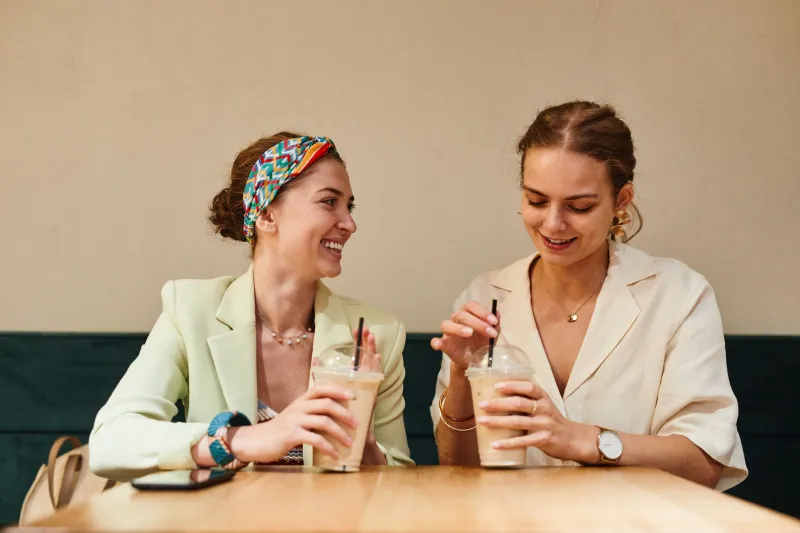
The Date That Doesn't Feel Like a Date
Picture this: you meet someone through a mutual friend, a rec league, or a book club. You hang out a few times with zero romantic agenda. You learn they hate cilantro and love early Kanye and always send voice memos instead of texts. And then one day, somewhere between the third group hangout and a random Tuesday coffee run, something shifts.
That's not a rom-com plot device. For a surprising number of Americans, that's just... how their best relationships started.
The friendship-first approach to dating has been floating around relationship advice circles for years, but it's having a genuine cultural moment right now. Post-pandemic, post-swipe-era disillusionment, and amid a broader rethinking of what we actually want from romantic partnerships, more people are deliberately slowing down the romantic timeline and letting connection do its own thing.
Why the Traditional Dating Funnel Is Breaking Down
The conventional model of American dating has a pretty clear structure: match, message, meet for drinks, decide if there's chemistry, and either escalate or eject. It's efficient in theory. In practice, it's created a generation of people who are exhausted, emotionally guarded, and increasingly unsure of what they're even looking for.
The problem with chemistry-first dating is that chemistry is a notoriously unreliable narrator. It can be intense and misleading. It can mask incompatibility. It can also be completely absent in early interactions with someone who turns out to be a genuinely great match — especially for people who are introverted, anxious, or simply need more time to warm up.
"The 'spark on the first date' expectation has done a lot of damage," says Dr. Priya Mehta, a clinical psychologist based in Seattle who specializes in relationship patterns. "It prioritizes a very narrow, performance-based version of attraction over the slower-building kind that tends to actually sustain long-term relationships."
Friendship, by contrast, builds something sturdier. You see someone in low-stakes situations. You watch how they treat service workers, how they handle a bad day, whether they actually listen when you talk. That's intimacy — the real kind — and it often lays a foundation that early-stage romantic chemistry simply can't replicate.
What the Research Actually Says
Here's where it gets genuinely interesting. A 2023 study out of the University of Victoria found that the majority of long-term couples — nearly 68% — started as friends before becoming romantic partners. That number is even higher among people who describe themselves as highly satisfied in their relationships.
Researchers have also found that relationships with a friendship foundation tend to show higher levels of trust, better conflict resolution, and greater long-term satisfaction. The theory is fairly intuitive: when you already know and like someone as a person before desire enters the picture, you're building on something real rather than projecting onto a stranger.
Psychologist John Gottman, whose decades of relationship research has become something of a gold standard in couples therapy, has long argued that deep friendship is the single most important predictor of relationship success. Not passion, not compatibility tests, not love languages. Friendship.
Apps Are Finally Catching Up
The technology side of dating is starting to reflect this shift, even if awkwardly. Bumble launched its BFF feature years ago and has been gradually integrating more friendship-adjacent social features. Hinge has experimented with conversation prompts designed to encourage genuine getting-to-know-you exchanges rather than immediate romantic positioning. A newer app called Timeleft matches strangers for group dinners — no profiles, no romantic framing, just shared experience.
None of these are perfect, and most people will tell you that intentionally "friend-zoning" a dating app interaction feels a little forced. But the impulse behind these features is real: there's a market demand for connection that doesn't immediately demand romantic performance.
Outside of apps, the trend shows up in how people are structuring their social lives more broadly. Group hangs, hobby-based meetups, and community events have become de facto low-pressure dating environments for people who are done with the exhausting theater of the formal first date.
Real People, Real Stories
Ashley Tran, 29, a teacher in Nashville, started dating her current partner after eight months of friendship through a hiking group. "We were genuinely just friends. I didn't even think of him that way at first. And then one day I realized I was looking for him when I walked into a room, and that was kind of the moment."
What she describes as the best part? "I already knew I liked him as a person. There was no guessing, no 'is this guy secretly terrible?' anxiety. I'd already seen him be kind and funny and real. The romantic part almost felt like a bonus."
That sentiment comes up repeatedly among people who've navigated this path. The friendship stage functions as a kind of extended, low-stakes vetting process — one that reveals character in ways that curated dates simply don't.
Of course, it's not without complications. The transition from friendship to romance can be genuinely awkward, and there's always the risk of unrequited feelings disrupting a good friendship. Those are real costs, and anyone going into this approach with eyes open needs to acknowledge them.
How to Actually Do This (Without Overthinking It)
The irony of "friendship-first dating" as a strategy is that the moment you treat it as a strategy, it kind of stops working. The whole point is to remove the performance pressure — so consciously engineering a friendship as a romantic long game defeats the purpose.
What actually works is more about mindset than method. It means staying open to connection in non-romantic contexts. It means not immediately writing someone off because the first interaction wasn't electric. It means investing in your social ecosystem — communities, hobbies, recurring gatherings — where you encounter the same people multiple times over weeks and months.
It also means getting comfortable with ambiguity. Not every friendship will turn romantic, and that's genuinely fine. The goal isn't to friend-zone your way into a relationship. The goal is to build a life full of real human connection, and let the romantic possibilities emerge from that naturally.
The Bigger Picture
There's something almost countercultural about the friendship-first approach in 2024. In an era of instant everything — instant matches, instant chemistry assessments, instant decisions about long-term compatibility — choosing to slow down and let something grow without forcing it feels almost rebellious.
But maybe that's exactly what modern dating needs. Not another algorithm, not another app feature, not another framework for optimizing attraction. Just people actually getting to know each other before they decide what they want to be.
Turns out, that's been the answer the whole time.