Trying Too Hard Is the New Deal Breaker: What Your Dating Profile Is Really Saying About You
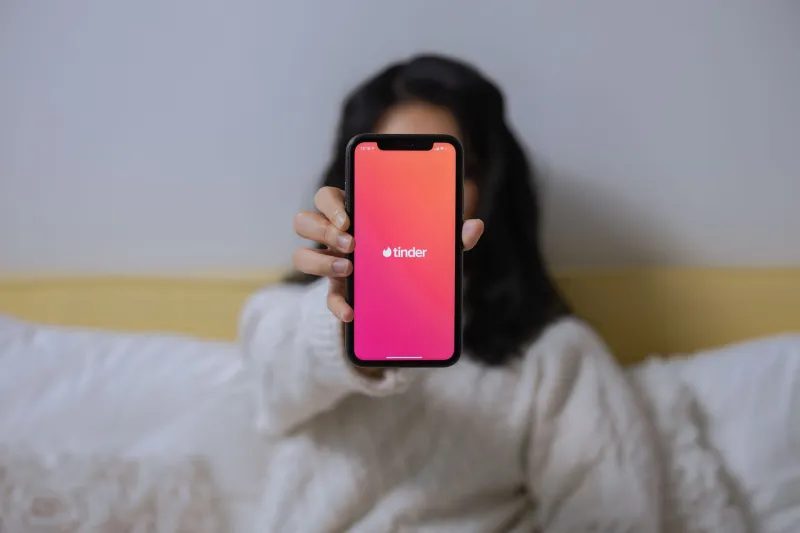
There's a specific kind of exhaustion that comes from staring at your own face for forty-five minutes trying to decide which photo makes you look "casually attractive" instead of "desperately attractive." Most of us have been there. We swap the group shot, debate the sunset selfie, agonize over whether listing "avid hiker" sounds adventurous or performative. Then we hit publish and wait.
And often? The matches we get feel... off. Superficial. Like people swiped on a character we invented rather than an actual human they'd want to share tacos with.
That's not a coincidence. It's the authenticity paradox — and it's quietly sabotaging a lot of people's dating lives.
The Paradox, Explained
Here's the tension: dating apps are inherently performative spaces. You're building a highlight reel. Everyone knows this. But somewhere between "putting your best foot forward" and "constructing an entirely aspirational alter ego," something breaks down.
Research published in the Journal of Social and Personal Relationships found that people who present idealized versions of themselves online tend to generate more initial interest but experience significantly higher rates of first-date disappointment — on both sides. The match shows up expecting the curated version. The real person shows up. Nobody wins.
Dating coach Mara Ellison, who's worked with clients across New York and LA, puts it bluntly: "People think they're playing the long game by leading with their best self. But what they're actually doing is setting a trap — for their match and for themselves."
The trap springs the moment real life enters the picture.
What 'Trying Too Hard' Actually Looks Like
It's subtler than you'd think. You don't have to be catfishing anyone to fall into over-curation territory. The signals are often small — but they register.
The filter situation. Heavy smoothing filters, extreme lighting corrections, or that one app that quietly slims your face — users notice, even if they can't articulate why. A 2022 study out of Stanford found that profiles with heavy visual filters were rated as less trustworthy, even when participants couldn't identify the specific manipulation. The brain picks up on incongruence. Trust your audience to do the same.
The action-packed photo lineup. One hiking photo? Relatable. Six consecutive adventure shots — skydiving, rock climbing, marathon finish line, kayaking — reads more like a LinkedIn profile for an extreme sports brand than a person someone wants to date. It signals that you're selling a lifestyle, not sharing one.
The bio that's trying to cover all the bases. "Lover of good food, bad puns, and long walks on the beach (yes, really)." We've all seen it. We've probably written it. The problem is that trying to appeal to everyone — sprinkling in humor, depth, adventure, and approachability all at once — ends up reading as generic. Specificity is what actually creates resonance.
Psychologist Dr. James Chu, who specializes in digital intimacy and self-presentation, explains it this way: "When a profile feels too polished, it triggers what I call 'authenticity skepticism.' People start unconsciously asking: what is this person hiding? The irony is that a little imperfection actually builds more trust than a perfect presentation."
What Actually Gets Meaningful Matches
Here's the uncomfortable truth: the profiles that generate real, lasting connections tend to look a little messier on the surface.
Not sloppy. Not careless. But human.
That means a photo where you're genuinely laughing, even if the lighting isn't perfect. A bio that mentions something oddly specific — the Springsteen deep cuts you can't stop listening to, your strong opinion about Chicago-style pizza — instead of the safe, crowd-pleasing version of yourself. A caption that sounds like you actually wrote it at 9pm on a Tuesday, not like it was A/B tested.
Dating app data backs this up. Hinge's internal research has repeatedly shown that prompts and photos that feel personal and specific outperform generic "fun-loving" content in terms of conversation starts and date conversion. People don't match with archetypes. They match with details.
"The goal isn't to look like everyone's type," Ellison says. "The goal is to look unmistakably like your type's type. That's a very different strategy."
Where Presentation Ends and Deception Begins
This is where things get philosophically murky — and honestly, worth sitting with.
Most dating coaches and psychologists draw the line at intentional misrepresentation versus aspirational framing. Using a photo from three years and fifteen pounds ago? Deception. Using your most flattering recent photo? Presentation. Listing "entrepreneur" when you have a side hustle and a full-time job at Target? Depends on how you define it — but your date is going to form an opinion pretty fast.
Dr. Chu suggests a simple gut-check: "Ask yourself, would I feel relieved or anxious if my date saw this profile after meeting me? Relief means you've captured something real. Anxiety means you've created a gap you'll eventually have to close."
That gap is where connection goes to die.
The people who tend to build genuinely good relationships from dating apps aren't the ones with the most optimized profiles. They're the ones who were clear enough about who they actually are that the right person recognized them — and showed up ready to meet that person, not a fantasy version.
The Reframe You Actually Need
Stop thinking about your profile as a marketing campaign. Start thinking about it as a filter.
Your job isn't to maximize swipes. Your job is to attract the right kind of attention from people who would genuinely like you — quirks, bad lighting, niche interests and all. A profile that repels the wrong people while pulling in the right ones is doing exactly what it should.
That means being willing to be a little weird, a little vulnerable, a little you — in a space that usually rewards performance.
It's harder than it sounds. Showing up authentically in a curated environment takes more courage than picking the perfect filter. But the matches you get on the other side of that choice? They tend to actually go somewhere.
And isn't that the whole point?