Your Dating App Knows Your Type Better Than Your Friends Do — Here's the Proof
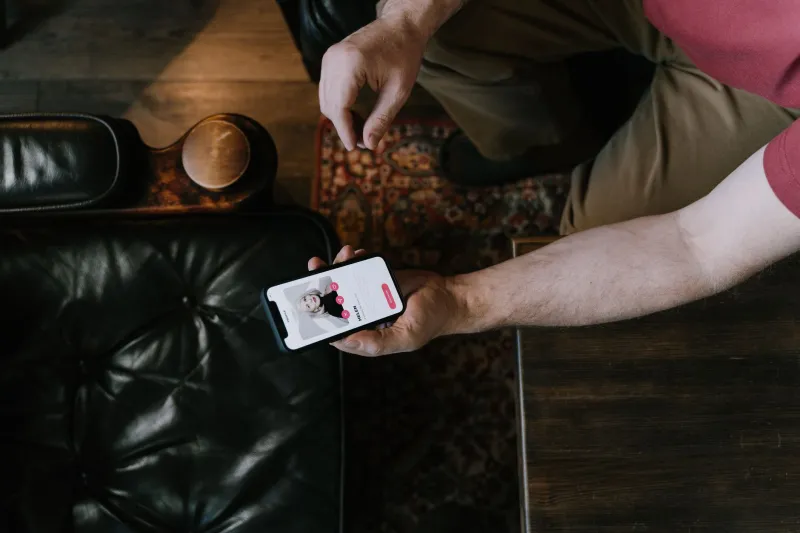
You've got your filters set. Height range: 5'10" and up. Non-smoker, obviously. College-educated. Looking for something serious. You've answered the prompts thoughtfully, picked photos that show your best angles, and you genuinely believe you have a solid sense of what you're looking for.
The algorithm disagrees.
Not in a mean way — more in a "we've watched 50 million people do this and the patterns are kind of wild" way. Because the data scientists working behind the scenes at apps like Hinge and Bumble have spent years watching what users say they want, what they actually swipe on, and — most revealing of all — who they end up sticking with. And the gaps between those three things are enormous.
Welcome to the age of algorithmic attraction, where your romantic patterns are being studied in more detail than you probably realize.
The Preference Gap Is Massive
Let's start with the most uncomfortable finding: the attributes people filter for in their dating app settings are often poor predictors of who they'll actually match with meaningfully.
Hinge has been particularly vocal about this in the data they've shared publicly. In various analyses, they've found that users frequently swipe right on profiles that don't match their stated preferences — and that those "off-type" matches often produce longer, more engaged conversations than the ones that technically checked every box.
Height is the classic example. A significant chunk of users filter for partners above a certain height, but when researchers look at which matches lead to actual dates and ongoing relationships, height becomes statistically much less predictive of success than factors like response time, the kind of humor someone uses in their prompts, or even the energy of their first message.
"People think they know what they're attracted to, but attraction is contextual and dynamic," says Dr. James Okafor, a behavioral psychologist who consults with tech companies on user behavior. "What you're drawn to on a static profile is not the same as what you'll feel chemistry with in real life — and algorithms that understand that are getting much better at bridging that gap."
What the Data Actually Predicts
So if our stated preferences are unreliable, what does actually predict a good match? The apps have been gathering clues, and some of the findings are genuinely surprising.
Response latency matters more than you'd think. Bumble's data teams have noted that matches where both people respond relatively quickly in the early stages — within a few hours, rather than days — are significantly more likely to convert to actual dates. This isn't shocking on its face, but the degree to which it outperforms demographic compatibility metrics is striking.
Shared communication style is a sleeper variable. Hinge has found that couples who use similar sentence lengths, punctuation habits, and even emoji frequency tend to have longer, more successful relationships. It sounds almost absurdly granular, but it tracks — communication style is a proxy for personality alignment, and the algorithm is picking up on it before you consciously register it.
Photos with context beat photos with aesthetics. Users who include photos that tell a story — at a concert, hiking, cooking, with a dog — consistently generate more meaningful engagement than people with technically better-looking but more posed photos. The algorithm has learned to weight this because the data shows it predicts actual connection, not just initial attraction.
Dealbreaker filters often backfire. This one is counterintuitive but well-documented. People who use the maximum number of filters tend to have lower match quality on average — not because their standards are too high, but because the rigidity of the filter set prevents the algorithm from surfacing people who might be genuinely compatible in ways that don't fit a checkbox.
The Compatibility Signals Nobody Talks About
Beyond the surface-level stuff, apps are increasingly trying to detect what might be called "soft compatibility" — the harder-to-quantify signals that actually predict whether two people will vibe.
One of the more fascinating areas is emotional vocabulary. Apps that use prompt-based profiles have noticed that users who engage with emotionally nuanced prompts — ones that require some introspection rather than just a fun fact — tend to match better with others who do the same. It's essentially a self-selection mechanism for emotional intelligence, and the algorithm learns to recognize it.
Similarly, humor alignment has emerged as a surprisingly strong predictor. Not just "both people say they like to laugh" — but whether the specific flavor of humor in someone's prompts resonates with the person reading it. Sarcasm, self-deprecation, absurdism — these are distinct signals, and people are drawn to their own dialect of funny even when they can't articulate why.
Dr. Okafor calls these "invisible compatibility markers." "We're not consciously processing most of this," he notes. "But the algorithm sees thousands of interactions and starts to map which signals cluster together in matches that last. It's essentially doing pattern recognition on human attraction at a scale no individual could replicate."
When the Algorithm Gets It Wrong
To be fair, algorithmic matching is far from perfect, and the apps themselves would tell you that. There are well-documented bias issues — research has shown that racial preferences embedded in user behavior get amplified by engagement-based algorithms, which can reinforce rather than challenge those patterns. That's a genuine problem the industry hasn't fully solved.
There's also the question of what "success" means in this context. If an algorithm optimizes for matches that lead to dates, it might not be optimizing for matches that lead to healthy long-term relationships — those are related but distinct outcomes. Some apps are trying to shift toward longer-term metrics, but it's a complicated technical and ethical challenge.
And then there's the simple human reality that no algorithm fully accounts for: sometimes chemistry is just weird and unpredictable, and the person you'd least expect to fall for is the one who ends up mattering most. The data can tell you a lot. It can't tell you everything.
So What Do You Actually Do With This?
If the algorithm knows your type better than you do, the practical takeaway isn't to surrender your preferences entirely — it's to hold them more loosely.
Be honest in your profile. The algorithm works better when it has accurate data, and that means prompts that reflect who you actually are, not who you think you should be. Use photos that show your life in context. Engage with matches quickly when you're interested. And maybe — just maybe — give a shot to that person who doesn't quite fit the mental checklist but whose messages make you laugh in a way you didn't expect.
The apps have done the research. The least we can do is stay a little open to what they've found.